
























You know that nervous moment when you're shaving your knees and you're thinking, "okay, go slow, go slow..." and then—ouch. Whether it's a nick, a patch of angry red bumps, or that telltale sting of razor burn, shaving bony areas like knees (and ankles, and shins) can feel like navigating an obstacle course. Here's the thing: those tricky spots don't have to be so intimidating. With the right technique and a little extra TLC, you can glide right over knees and other bony areas without the aftermath. Let's talk about how to make it happen.
Why Knees Are So Tricky to Shave in the First Place
Let's be real—knees are just awkward. Unlike the smooth expanse of your thighs or calves, knees have all these curves, angles, and literal bones sitting right beneath thin skin. There's not much cushion between your razor and that hard surface, which means every little movement matters more.1
Plus, the skin on your knees tends to be a bit drier and more textured than other areas (hello, perpetual ashy knees). When skin is dry, your razor has to work harder to get a close shave, which increases friction and the chances of irritation. Add in the fact that you're probably bending and contorting to reach the area, and it's no wonder knees are a common spot for razor burn, nicks, and ingrown hairs. But understanding why this area is challenging is the first step to conquering it.
Prep Work Makes All the Difference
Here's where most people skip ahead, but trust us—what you do before the razor touches your skin is just as important as the shave itself. Think of it like priming a canvas before painting.
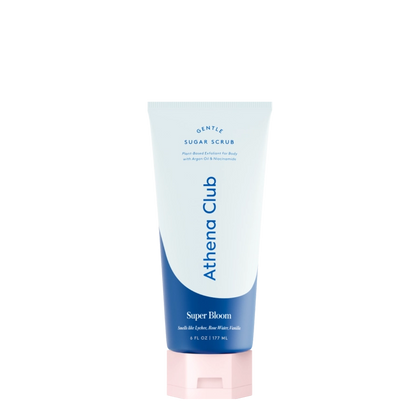
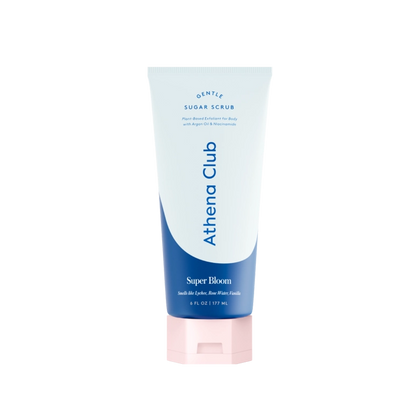
Start by softening the hair and skin. A warm shower is your best friend here—it opens up pores and makes hair easier to cut.2 Let the warm water run over your knees for a few minutes before you even think about shaving. If you have time, gently exfoliate the area with our Gentle Sugar Scrub to slough away dead skin cells. This helps prevent ingrown hairs and gives your razor a smoother surface to work with.
After exfoliating (or just cleansing with our Skin Replenishing Body Wash), don't let your skin dry out. Apply your shaving product while skin is still damp—this locks in moisture and creates that crucial slip your razor needs to glide smoothly over those bony contours.
The Right Shaving Product Is Your Secret Weapon
Can we talk about how game-changing the right shave product is? Especially for tricky areas like knees, you want something that provides serious cushion and glide—not just a thin foam that disappears the second your razor touches it.
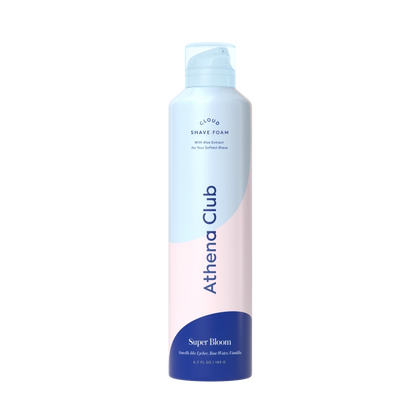
Our Fluffy Shave Butter—which won Allure's Best of Beauty Award in both 2024 and 2025—has this thick, creamy formula with rosemary leaf extract that creates a protective barrier between your razor and skin. You can actually see where you've shaved, which is super helpful when you're navigating the curves of your knees. For an even smoother experience, try layering our Glossy Shave Oil underneath. This oil-serum hybrid with SKINCLOUD™ technology adds an extra layer of slip that makes your razor absolutely glide.
The key is not being stingy with product. Use more than you think you need on bony areas—that extra cushion is what protects your skin from irritation.
Technique: Slow, Steady, and Strategic
Alright, now for the actual shaving part. The golden rule for knees? Bend them. Seriously. When your knee is bent at about a 90-degree angle, the skin stretches taut over the bone, creating a smoother, flatter surface that's way easier to shave.3 Trying to shave a bent knee while your leg is straight is like trying to shave a rumpled sheet—you're just asking for trouble.
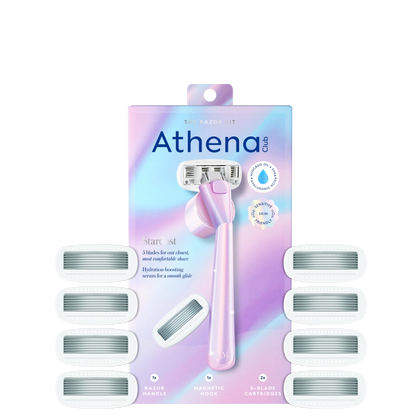
Use short, light strokes rather than long, sweeping ones. Your razor should be doing the work, not your hand pressing down. This is especially true if you're using the Athena Club Razor Kit, which features a 5-blade design with spaced-out blades that follow your curves, plus a hyaluronic acid serum strip and shea butter-enhanced blades. The design of this razor (recognized by Allure as the Best Razor for Sensitive Skin in 2025) is built to adapt to your body's contours, so let it do its thing. Good Housekeeping found it delivers 89% single-pass shaving, which means less going over the same spot—and less chance of irritation.
Shave with the direction of hair growth first, especially on that first pass. Yes, you might get a closer shave going against the grain, but on sensitive, bony areas, that's also how you end up with razor burn and ingrown hairs. If you want to go against the grain for extra smoothness, save it for a very light second pass, and only if your skin can handle it.
The Post-Shave Matters Just as Much
You did it—you navigated those knees like a pro. But don't just rinse and run. What you do in the minutes after shaving can make or break your results.
Rinse with cool (not hot) water to help close pores and calm any inflammation. Pat your skin dry gently—no aggressive rubbing. While your skin is still slightly damp, apply a fragrance-free moisturizer to lock in hydration. Your skin has just been exfoliated by the razor itself, so it needs that moisture barrier to heal and stay smooth.
Avoid anything harsh or fragranced immediately after shaving (save the scented lotions for tomorrow). And if you can, give your skin a few hours before doing any intense exercise that might cause friction or sweating on those freshly shaved knees. Let your skin recover and thank you later with that silky-smooth feeling we're all after.
What to Do If You Still Get Razor Burn
Look, even with perfect technique, sometimes razor burn happens. Maybe you were in a rush, maybe your razor was due for a blade change, or maybe your skin was just feeling extra sensitive that day. It's okay—it's not a personal failure.
If you notice redness, bumps, or that characteristic stinging sensation, resist the urge to shave over it again or pick at any bumps. Apply a cool compress to calm inflammation, and use a gentle, unscented moisturizer to keep the area hydrated. Aloe vera gel can also be soothing. Avoid tight clothing that might rub against the irritated area, and definitely skip any exfoliating products until the skin has fully healed.
Most importantly, let your skin rest before your next shave. Shaving over already-irritated skin will only make things worse. Give it a few days to recover, and when you're ready to shave again, make sure you're using a fresh blade—dull blades are one of the main culprits behind razor burn.
The Bottom Line
- Knees are tricky because of their bony structure and drier skin—but with the right prep and technique, you can totally avoid razor burn
- Always prep with warm water and exfoliate beforehand, then use a shaving product with serious cushion and slip
- Bend your knee while shaving to create a smooth surface, use light pressure, and shave with the grain first
- A quality razor with multiple blades and built-in moisturizers makes navigating curves so much easier
- Post-shave care is crucial—rinse with cool water, moisturize immediately, and give your skin time to recover between shaves
Ready to transform your shaving routine from stressful to smooth? Check out the Athena Club collection and find your new favorite essentials that make even the trickiest spots feel effortless.
Sources
- American Academy of Dermatology Association. "How to Prevent Razor Bumps and Ingrown Hairs." AAD.org.
- Cleveland Clinic. "The Best Way to Shave for Sensitive Skin." Health Essentials, 2023.
- Mayo Clinic. "Shaving Tips for a Smooth, Safe Experience." MayoClinic.org.


