





















You've just stepped out of the shower feeling fresh, you shave your inner thighs, and everything seems great—until a few days later when you notice those annoying dark spots starting to appear. If this sounds familiar, you're definitely not alone. Dark spots on the inner thighs after shaving are super common, and the good news? They're usually preventable once you know what's causing them and how to adjust your routine.
What are those dark spots that appear on my inner thighs after shaving?
The short answer: Those dark spots are usually a type of hyperpigmentation called post-inflammatory hyperpigmentation (PIH). Basically, when your skin gets irritated from shaving—whether that's from razor burn, ingrown hairs, or just general friction—your body responds by producing extra melanin in that area as part of its healing process.1 That excess melanin is what shows up as those darker patches or spots. Honestly, it's just your skin trying to protect itself, but we totally get that it's frustrating when you're trying to have smooth, even-toned skin.
Why does shaving specifically cause dark spots on my inner thighs?
Here's the thing: Your inner thighs are already dealing with a lot. The skin there is naturally more delicate and prone to friction from walking, exercise, and clothing rubbing throughout the day.2 When you add shaving into the mix—especially if you're using a dull razor, skipping prep, or going over the same area multiple times—you're creating micro-irritation and inflammation. That repeated irritation triggers melanin production, which leads to darkening over time. The combination of sensitive skin, constant friction, and regular hair removal basically creates the perfect storm for hyperpigmentation to develop.
Are these dark spots the same as ingrown hairs?
Not exactly, but they're definitely related. Ingrown hairs happen when a hair grows back into the skin instead of up and out, creating a bump that can get inflamed or infected. Dark spots, on the other hand, are the pigmentation left behind after that inflammation heals—or from general irritation even without ingrown hairs.3 Think of ingrown hairs as the immediate reaction, and dark spots as the aftermath. You can get dark spots without having ingrown hairs, but if you're prone to ingrowns, you're more likely to end up with hyperpigmentation too since both are responses to irritation.
How can I prevent dark spots from forming in the first place?
Prevention really comes down to being gentler with your skin and creating less irritation during the shaving process. Start by prepping properly—shave after a warm shower when your hair is softer and your pores are open. Use a quality shaving product like our Glossy Shave Oil or Fluffy Shave Butter (which won an Allure Best of Beauty Award in 2024 and 2025) to create a protective barrier between your skin and the blade. Always use a sharp, clean razor—our Razor Kit features five spaced-out blades that follow your curves and includes a hyaluronic acid serum strip plus shea butter–enhanced blades for less friction. And here's a big one: resist the urge to go over the same spot repeatedly. Light pressure and single passes are your friends here.
Should I exfoliate my inner thighs before or after shaving?
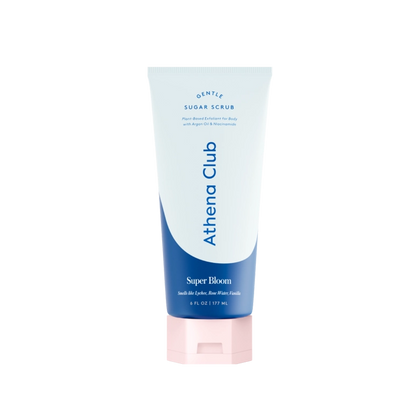
Definitely before, not after. Exfoliating before you shave helps remove dead skin cells and lift hairs away from the skin, which means your razor can glide more smoothly and you're less likely to get ingrowns or irritation.4 Try using our Gentle Sugar Scrub a day or two before shaving—this gives your skin time to calm down before introducing a razor. Never exfoliate right after shaving though, because your skin is already slightly sensitized and you don't want to add more irritation. Think of exfoliation as prep work that sets you up for a smoother, less irritating shave.
What's the best shaving technique to avoid irritation on inner thighs?
Honestly, technique matters just as much as the products you use. Always shave in the direction of hair growth first—yes, it might not feel as close, but going against the grain immediately is a fast track to irritation and those dark spots. Use light, gentle strokes and let the razor do the work rather than pressing down hard. Make sure you're using enough lubrication so the blade glides rather than drags. And here's something people don't talk about enough: rinse your razor after every stroke or two to prevent buildup. A clogged razor pulls at hairs instead of cutting them cleanly, which creates more inflammation. If you want an even closer shave after your first pass, reapply your shaving product and go very carefully across the grain—but skip against the grain entirely on this sensitive area.
How often should I replace my razor blades?
The general rule is every five to seven shaves, but honestly, if you notice any tugging or dragging, it's time for a fresh blade even if you haven't hit that number yet. Dull blades are one of the biggest culprits behind irritation and dark spots because they require more pressure and multiple passes to get the job done. Our Razor Kit makes it super easy to swap out blades regularly, and keeping your razor sharp means you can shave with less pressure, fewer passes, and way less irritation. Think of it as an investment in preventing those dark spots before they start.
Can my shower products be making the dark spots worse?
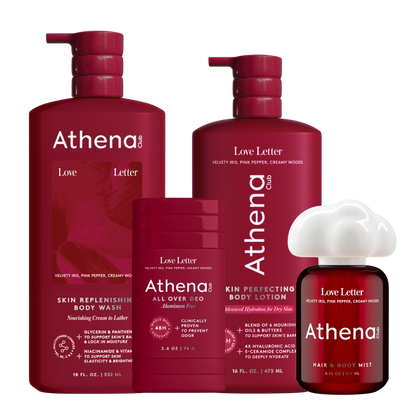
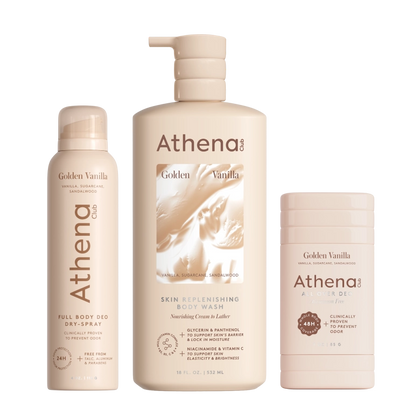
They definitely can, especially if you're using harsh soaps or products with a lot of fragrance and irritating ingredients. Your inner thighs need gentle cleansing, particularly right after shaving when your skin is more vulnerable. Our Skin Replenishing Body Wash is pH-balanced and formulated with a vitamin complex to cleanse and nourish without stripping or irritating your skin—it won an Elle Magazine Canada Beauty Grand Prix in 2025. After shaving, stick to gentle, fragrance-free products and avoid anything with alcohol or harsh actives that could further inflame the area. Your post-shave routine should be all about soothing and protecting, not adding more potential irritation.
What ingredients should I look for to help fade existing dark spots?
For fading hyperpigmentation that's already there, you'll want to look for gentle brightening ingredients. Vitamin C is great for evening out skin tone, niacinamide helps reduce inflammation and lighten dark spots, and alpha hydroxy acids (AHAs) like glycolic or lactic acid can help with gentle exfoliation to speed up cell turnover.5 The key word here is gentle—your inner thighs are sensitive, so you want to avoid anything too harsh or aggressive. Apply these treatments to clean, dry skin and give them time to work; hyperpigmentation doesn't fade overnight. And always, always follow up with sunscreen if the area will be exposed to sun, because UV exposure can make dark spots even darker.
How long does it typically take for dark spots to fade?
Here's the honest truth: it varies, but you're usually looking at several weeks to a few months, depending on how dark the spots are and how consistent you are with treatment and prevention. Post-inflammatory hyperpigmentation can be stubborn, especially in areas that experience constant friction like the inner thighs.6 The most important thing is to stop creating new irritation while you're trying to fade existing spots. That means following all those prevention tips—gentle shaving technique, sharp razors, proper prep—while also using brightening treatments. If you're not seeing improvement after a few months, or if the dark spots are really bothering you, it's worth checking in with a dermatologist who can recommend stronger treatments like prescription retinoids or chemical peels.
Should I just skip shaving my inner thighs altogether?
That's totally a personal choice, and there's absolutely no right or wrong answer. If shaving is causing persistent dark spots and irritation that bother you, taking a break or trying other hair removal methods might make sense. Some people find that waxing, sugaring, or laser hair removal causes less hyperpigmentation for them because there's less frequent friction. But if you love the smooth feeling of shaved skin, you don't have to give it up—you just need to refine your technique and give your skin the extra care it needs. Think about what matters most to you: the aesthetic you want, how your skin feels most comfortable, and how much effort you want to put into your hair removal routine. There's no wrong answer here.
Quick Answers
- Dark spots on inner thighs after shaving are usually post-inflammatory hyperpigmentation caused by irritation and inflammation from the shaving process
- Prevention is key: prep skin properly, use sharp razors, apply quality shaving products, and use gentle technique with light pressure
- Exfoliate before shaving (not after) to prevent ingrowns and reduce irritation that leads to dark spots
- People with darker skin tones are more prone to developing hyperpigmentation from shaving irritation
- Fading existing spots takes time—several weeks to months—and requires consistent treatment plus stopping new irritation
- Replace your razor blades every five to seven shaves to avoid the tugging and dragging that creates inflammation
The Bottom Line
Dark spots on your inner thighs after shaving can be frustrating, but they're usually preventable with the right approach. By understanding that these spots come from inflammation and irritation, you can make simple changes to your shaving routine that make a real difference. Focus on gentle prep, sharp razors, quality products, and proper technique. Be patient with existing spots—they'll fade with time and consistency. And remember, your self-care routine should make you feel good, not stressed. Whether that means refining your shaving technique or exploring other hair removal options, do what works best for your skin and your life.
Ready to upgrade your self-care routine? Explore the full Athena Club collection and discover what works for you.
Sources
- Davis EC, Callender VD. Postinflammatory hyperpigmentation: a review of the epidemiology, clinical features, and treatment options in skin of color. J Clin Aesthet Dermatol. 2010;3(7):20-31.
- Draelos ZD. The effect of lubrication on shaving. Int J Cosmet Sci. 2012;34(1):1-4.
- Ogunbiyi A. Pseudofolliculitis barbae; current treatment options. Clin Cosmet Investig Dermatol. 2019;12:241-247.
- Baumann L. Cosmetic Dermatology: Principles and Practice. 2nd ed. New York: McGraw-Hill; 2009.
- Callender VD, St Surin-Lord S, Davis EC, Maclin M. Postinflammatory hyperpigmentation: etiologic and therapeutic considerations. Am J Clin Dermatol. 2011;12(2):87-99.
- Taylor SC, Torok H, Jones T, et al. Efficacy and safety of a new triple-combination agent for the treatment of facial melasma. Cutis. 2003;72(1):67-72.
- Kaufman BP, Aman T, Alexis AF. Postinflammatory Hyperpigmentation: Epidemiology, Clinical Presentation, Pathogenesis and Treatment. Am J Clin Dermatol. 2018;19(4):489-503.


