














You rinse your razor after every shave, maybe even give it a little shake to get the water off. You're doing everything right—so why does it still get rusty? It's one of those annoying beauty mysteries that can make you question your entire shower routine. The truth is, even with proper rinsing, razors are constantly battling moisture, and that's a recipe for rust. Let's talk about why this happens and what you can actually do to keep your blades in better shape.
Why does my razor rust even when I rinse it thoroughly after every use?
Here's the thing: rinsing helps, but it doesn't completely solve the moisture problem. Even after a good rinse, tiny water droplets cling to the blades and get trapped between them—especially in multi-blade razors.1 That lingering moisture creates the perfect environment for oxidation, which is just a fancy way of saying rust. Your bathroom's humidity doesn't help either. It's like your razor is sitting in a steam room between shaves, and all that dampness accelerates the rusting process. So even though you're rinsing properly, you're fighting an uphill battle against basic chemistry and bathroom conditions.
What actually causes razor blades to rust so quickly?
The short answer is oxygen plus moisture equals rust. Most razor blades are made from stainless steel, which is rust-resistant but not rust-proof.2 When water sits on the metal surface, it starts a chemical reaction called oxidation. Add in any soap residue, dead skin cells, or minerals from hard water, and that reaction speeds up even more. The blades on your razor are also incredibly thin—they have to be for a close shave—which means there's less protective coating and more vulnerability to corrosion. Basically, your razor is delicate by design, which unfortunately makes it more prone to rust.
Does the quality of my razor affect how quickly it rusts?
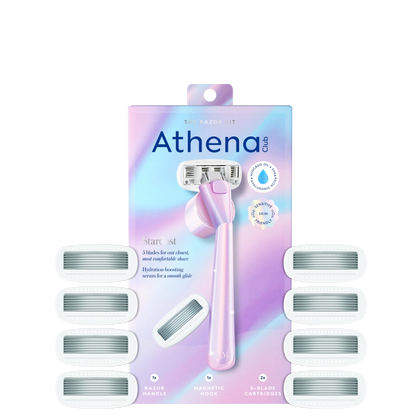
Absolutely. Higher-quality razors typically use better-grade stainless steel with protective coatings that resist rust longer. The Razor Kit from Athena Club, for example, features premium five blades that are designed to maintain their edge and resist corrosion better than cheaper alternatives. The blade spacing also matters—when blades are properly spaced out, water and debris don't get as trapped, which means less moisture sitting around causing problems. Cheaper disposable razors often use lower-quality metal with minimal protective coating, so they're basically destined to rust faster. Investing in a quality razor really does make a difference in longevity.
Is rust on my razor actually dangerous, or just gross?
Honestly, it's both. A rusty razor isn't just unsightly—it can actually irritate your skin or cause small cuts that are more prone to infection.3 Rust creates a rough, uneven surface on the blade, which means instead of gliding smoothly across your skin, it's dragging and catching. That leads to nicks, razor burn, and general irritation. Plus, rust can harbor bacteria, which is the last thing you want near any tiny cuts or scrapes. If you spot rust on your blades, it's definitely time to swap them out. Your skin deserves better than a crusty, oxidized blade.
How should I actually dry my razor to prevent rust?
After rinsing, give your razor a few good shakes to get as much water off as possible. Then—and this is key—pat it dry with a clean towel. Focus on getting between the blades where water loves to hide. Some people swear by using a hair dryer on the cool setting to blast away any remaining moisture, which actually works pretty well if you have the time. The goal is to eliminate as much water as possible before storing it. Store your razor outside the direct spray zone of your shower, ideally somewhere with better air circulation. The Razor Kit comes with a magnetic hook that lets you store it on your shower wall where it can air-dry properly instead of sitting in a puddle.
Does leaving my razor in the shower make rust worse?
Yes, and it's probably the biggest culprit behind premature rust. Your shower is basically a tropical rainforest—warm, humid, and constantly wet. Even if your razor isn't directly under the water stream, it's still exposed to steam and moisture in the air. That constant humidity means your blades never fully dry between uses, and that's when rust really takes hold. If you can, store your razor outside the shower in a drier spot, like a medicine cabinet or on your bathroom counter. If you must keep it in the shower, at least position it away from direct water exposure and make sure it can drain and dry as much as possible.
Can hard water make my razor rust faster?
It definitely can. Hard water contains minerals like calcium and magnesium that leave deposits on your razor blades.1 These mineral deposits trap moisture against the metal and create additional rough spots where rust can start forming. You might notice a white, chalky buildup on your blades—that's hard water residue. If you have hard water, it's extra important to thoroughly rinse your razor and dry it well after each use. You can occasionally soak your razor in white vinegar for a few minutes to dissolve mineral buildup, then rinse it clean and dry it completely. It's a simple trick that can extend blade life.
Does using shaving cream or oil affect rust formation?
Not really, as long as you rinse properly. The bigger issue is leaving product residue on the blades, which can trap moisture and create a barrier that prevents proper drying. That's why rinsing thoroughly is so important—you want to make sure all traces of shaving products, hair, and skin cells are completely washed away. Using quality shaving products like Glossy Shave Oil or Fluffy Shave Butter actually helps your razor glide more smoothly, which means less dragging and potentially less blade wear. The Fluffy Shave Butter even won Allure's Best of Beauty Award in 2024 and 2025. Just make sure to rinse everything off completely when you're done.
How often should I replace razor blades to avoid rust issues?
Most experts recommend replacing blades every 5-7 shaves, but honestly, it depends on how well you care for them and how thick your hair is. If you notice any rust, dullness, or tugging sensation, that's your sign to swap them out immediately. Even with perfect care, blades will eventually rust because they're constantly exposed to moisture—it's unavoidable. The key is catching it early before rust becomes a problem. Pay attention to how your razor feels. That smooth, just-glided-on feeling should be your baseline. When it starts feeling rough or causes irritation, it's time for fresh blades.
Are there any razor materials that don't rust at all?
Technically, ceramic and titanium-coated blades are more rust-resistant than standard stainless steel, but they're also more expensive and less common. Most quality razors, including the Razor Kit, use high-grade stainless steel with protective coatings that significantly slow down rust formation. Stainless steel offers the best combination of sharpness, durability, and affordability. While no blade is completely rust-proof when constantly exposed to moisture, better materials and coatings definitely give you more time before rust becomes an issue. The handle material matters too—the Razor Kit's premium aluminum handle with non-slip silicone coating won't corrode like cheaper plastic handles.
What's the best way to store my razor long-term?
If you're storing a razor for an extended period, make sure it's completely clean and bone-dry first. Remove any blade cartridges and store them separately in a dry place—not the bathroom if you can help it. You can even store blades in a small container with silica gel packets to absorb any ambient moisture. For the handle, just make sure it's dry and stored somewhere with low humidity. If you're someone who switches between different razors or takes breaks from shaving, proper storage makes a huge difference in how long your blades stay sharp and rust-free. Think of it like storing kitchen knives—moisture is the enemy.
Can I remove rust from razor blades or should I just replace them?
Honestly? Just replace them. While you technically can remove light rust with things like vinegar or baking soda, a rusted blade has already been compromised. Even if you remove the visible rust, the blade's edge is damaged and won't give you a clean, comfortable shave. Plus, microscopic rust particles and bacteria could still be lurking, which isn't worth the risk to your skin. Fresh blades are inexpensive enough that trying to salvage rusty ones just isn't worth it. Your skin—and your shaving experience—will thank you for starting fresh with sharp, clean blades.
Quick Answers
- Razors rust even with rinsing because moisture gets trapped between blades and bathroom humidity prevents complete drying
- Rust forms when oxygen reacts with moisture on the metal surface, accelerated by soap residue and hard water minerals
- Always shake off excess water, pat dry with a towel, and store your razor outside direct shower spray for best results
- Replace blades every 5-7 shaves or immediately if you notice rust, dullness, or irritation
- Quality razors with better materials and blade spacing resist rust longer than cheap disposables
- Never use rusty blades—they can irritate skin, cause cuts, and harbor bacteria
Ready to upgrade your self-care routine? Explore the full Athena Club collection and discover what works for you.
Sources
- American Academy of Dermatology Association. "How to prevent razor burn." AAD.org
- International Journal of Cosmetic Science. "Blade sharpness and surface corrosion in razor technology." 2019.
- Journal of Clinical and Aesthetic Dermatology. "Shaving and skin health: Understanding common complications." 2020.


